Equestrian Social Licence in 2026: A Practical Guide for Yards, Clubs and Shows
·
Social licence, the public’s ongoing trust that equestrian sport and horse-keeping deserve to exist, is no longer a conference slogan. It shows up in media coverage, federation messaging, research on how riders justify “normal” management, and in the quiet decisions every club makes on a Tuesday night: how hard is this track, how long are horses stabled, who is watching the warm-up?
This guide is for yard managers, instructors, club secretaries and course designers who want practical actions, not a philosophy essay.
What “social licence” actually means
In plain terms: permission from people who do not ride, neighbours, sponsors, parents, voters, journalists, to keep using horses in sport and leisure. Lose enough of that permission and you get restricted access to land, sponsorship flight, harsher regulation, and empty grandstands.
Inside the industry, 2025–2026 research and campaigns keep returning to the same gap: elite horses often receive excellent physical care (feed, farriery, vet) while behavioural and social needs, turnout, company, low-stress training, lag behind. Public audiences notice that gap even when insiders call it “how it’s always been done.”
Five pressure points in 2026
- Visible welfare at competitions, exhausted horses in collecting rings, harsh aids, heat without cool-down plans.
- Housing and turnout, stalled performance horses with little social contact.
- Youth and grassroots culture, what we teach juniors becomes the next decade’s “normal.”
- Digital evidence, phones film everything; a single clip travels further than a good yard’s decade of quiet care.
- Championship weeks, Aachen 2026 and other peak events put the sport under a global lens.
What a yard can do this month (no federation seat required)
Daily horse life
- Default to turnout and social contact unless a vet or safety reason says otherwise, write the exceptions down so they stay exceptions.
- Audit rugging, stabling hours and “box rest by habit.”
- Train staff to spot pain faces and stress behaviours, not only lameness.
Client communication
- Publish a one-page yard welfare standard (turnout targets, isolation rules, farrier/vet rhythms).
- Share why a horse is off work, transparency builds trust with owners who otherwise invent stories.
Biosecurity and health
- Pair welfare with biosecurity and clear health logging. A yard that cannot say when a horse was vaccinated or temperature-checked looks careless to outsiders and dangerous to neighbours.
What shows and clubs can change without rewriting the sport
| Area | Low-cost upgrade | Why it protects licence |
|---|---|---|
| Course design | Fair opening lines, level-appropriate distances | Fewer unnecessary stops and falls (welfare-minded SJ design) |
| Schedule | Realistic class spacing; shade and water | Reduces heat and mental overload (heat management) |
| Warm-up | Steward presence, surface quality | Stops “win at all costs” theatre |
| Paperwork | Clear rules, published course plans | Looks professional; reduces arguments |
| Messaging | Welfare statement on the schedule PDF | Signals values before an incident |
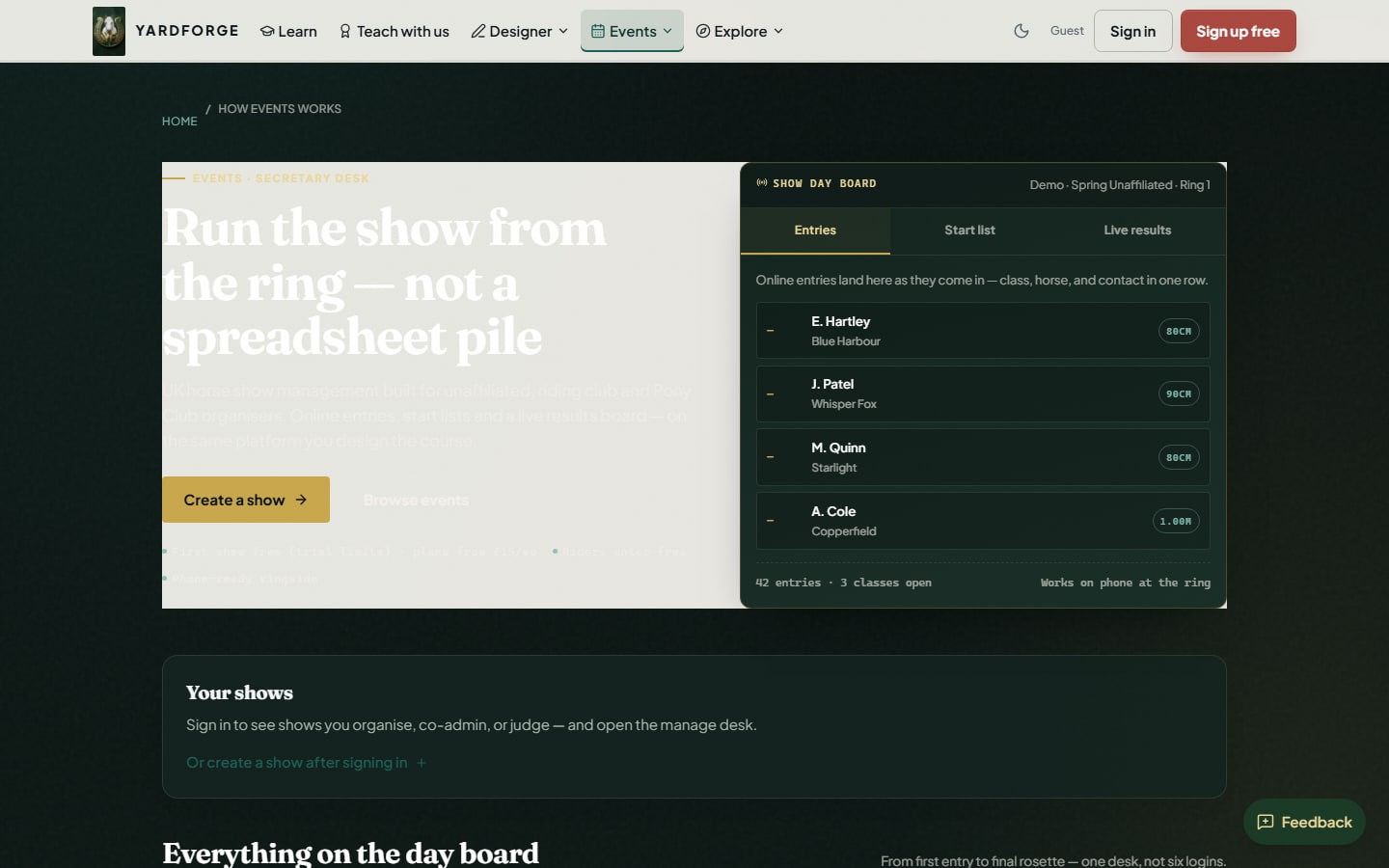
If you run entries digitally, keep the public face calm and clear, online horse show entries for UK organisers covers the ops side.
Course design is public ethics with poles
Every track teaches the audience what the sport values. A related distance that only works for the 10% who found the perfect canter is not clever; it is a filter that looks like a trap on camera. Prefer:
- Progressive difficulty (how to design a show jumping course)
- Honest related distances (combinations and strides)
- Time allowed that rewards riding, not lottery
Build and share a plan people can print and walk, the course designer exists so club designers can show what will be asked before the first horse leaves the box.
Language that helps (and language that hurts)
Helps: “We adjusted the track after the surface dried.” “This horse needs turnout before the second day.” “Class cancelled, heat index too high.”
Hurts: “The horse was being dramatic.” “That’s just how we warm up here.” “Welfare people don’t understand competition.”
Social licence is partly storytelling. Tell true stories of good care louder than the industry’s defensive ones.
A 30-day social licence sprint
Week 1, Walk the yard as a non-horsey visitor. Note smells, noise, stalled horses, and what a phone would film first. Week 2, Fix one housing or turnout issue and one competition process (water, shade, or warm-up steward). Week 3, Rewrite class descriptions and course notes so fairness is explicit. Week 4, Train staff on heat stress and biosecurity using short checklists, not long lectures.
Bottom line
Social licence is not won by a single campaign video. It is won when daily management, show-day design and public honesty line up. In 2026 the industry is still arguing about culture; the yards and clubs that quietly raise the floor on horse lives will still have a sport worth defending in 2030.

