Equine Biosecurity at Shows and Livery Yards: A Practical 2026 Checklist
Equine biosecurity is no longer only a competition-venue problem. UK yards, riding schools and unaffiliated shows share the same horses, lorries and water troughs, and outbreaks travel with them. British Equestrian’s Equine Health Week 2026 put health essentials, vaccinations and gathering risk back in the spotlight for owners and organisers. This guide turns that attention into a checklist you can run every week and every show day.
It is planning advice for yards and show teams, not a substitute for your veterinary surgeon or official FEI/BS biosecurity rules.
Why biosecurity is trending now
Several pressures stack in 2026:
- More mixed-use venues (livery + competitions + clinics on one site)
- Cost pressure that tempts people to skip isolation “because they look fine”
- National campaigns on equine health essentials and gathering hygiene
- Digital records making “who arrived when?” easier to prove, or embarrassing when missing
If you organise entries, run a yard, or design courses for home shows, biosecurity sits next to the course plan: both decide whether the day is fair and safe.
Core principles (keep these simple)
- Assume risk travels, in lorries, shared water, shared tack rooms, and people.
- Separate by risk, not by friendship, new horses, returning horses, and visitors are not the same as residents.
- Write it down, verbal “everyone knows” fails on a busy Saturday.
- Match paperwork to the horse, passport, vaccinations, and yard notes should agree.
Livery yard biosecurity checklist
Daily / weekly
- Monitor behaviour and appetite, dull horses at the back of the stable are a red flag (British Equestrian health messaging still starts here).
- Clean shared water and feed areas on a schedule, not “when someone remembers”.
- Quarantine policy for new horses, minimum isolation period agreed with your vet; separate mucking tools if possible.
- Visitor rules, where visitors park, which barns they enter, hand hygiene points.
- Record treatments and temperatures when anything looks off, see our guide to what to log in horse health records.
When horses leave and return
- Mark horses that have been off-site (shows, clinics, stud).
- Prefer separate turnout groups for a short period after busy weekends if your vet advises it.
- Check for nasal discharge, coughing, heat in legs, or sudden lethargy on return.
Digital tools that help (without replacing stockmanship)
A yard noticeboard and health log stop the WhatsApp group becoming your only “system”:
- Post isolation rules and vet contacts on the noticeboard where staff actually look.
- Keep vaccination and farrier dates on horse profiles so cover staff do not guess.
- Use yard management workflows so the morning routine is consistent even when staff rotate.
Show and gathering biosecurity
Before the show
- Publish a short biosecurity note with entries (where to park, water, isolation if a horse looks unwell).
- Require current vaccination status appropriate to the event (follow BS / FEI / venue rules, do not invent your own medical standard).
- Plan shared water: individual buckets preferred over communal troughs where practical.
- Know who the duty organiser is if a horse needs isolating on the day.
Course design and build (often forgotten)
Builders and designers touch every wing and pole:
- Clean hands / gloves when handling poles after a coughing horse has been in the ring.
- Prefer a clear numbered plan so fewer people wander the ring “just checking”.
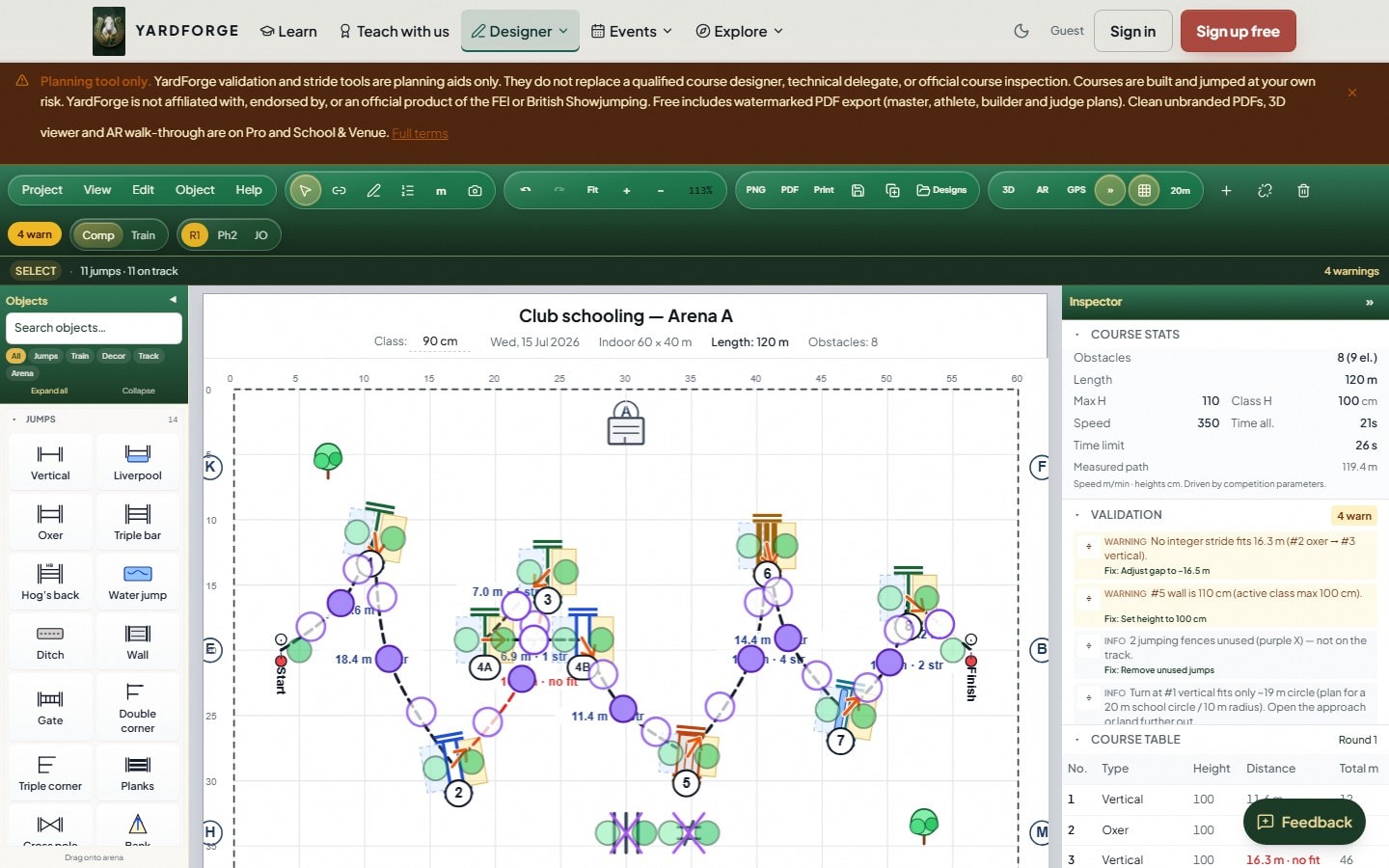
- Export the course as a PDF from the course designer so the build team is not inventing the track on the sand.
On the day
- Separate warm-up if one horse is clearly unwell, call the vet / organiser policy, not social media.
- Do not share bits, towels, or water buckets between unknown horses.
- Log anything unusual (horse withdrawn, vet called) for the venue’s records.
What “good” looks like for owners
- You can open one place and see last vaccination, last farrier, recent notes.
- New livery clients get a written isolation plan before the horse arrives.
- Your children / staff cover can still follow the routine without you on site.
Common mistakes
| Mistake | Better approach |
|---|---|
| “They only went to a local show” | Local shows still mix lorries and water |
| Isolation barn used as storage | Keep it ready year-round |
| Health notes only in WhatsApp | Structured health records |
| Course build with no plan | Design and print from the designer |
How YardForge fits
YardForge will not replace your vet. It will help you:
- Keep horse care notes and schedules in one login (horse health records)
- Run day-to-day yard ops without five apps (yard management software)
- Design and share competition-ready tracks for schooling and club shows (course design software)
Start free in the course designer during beta and build the health + yard side when you need it.
Related: Horse health logging: what to record · Equine first aid kit checklist · Horse worming schedule · Show day checklist · Livery yard digital checklist

