Horse Heat Stress and Hot Weather Management: A UK Yard Guide
·
Horse heat stress is no longer a “southern Europe only” problem. Warmer UK summers, humid show days and poorly ventilated barns put horses under thermal load even when the thermometer does not look extreme. This guide covers recognition, yard routines, riding decisions and recovery, written for owners, staff and coaches.
Not veterinary advice. If a horse is distressed, call your vet. Heat illness can escalate quickly.
Why heat is a bigger conversation in 2026
Climate and welfare coverage keep heat, hydration and recovery on the agenda. British Equestrian health campaigns regularly include hot weather advice alongside core health essentials. For competition yards, the risk is practical: a horse that looks “fine” at 09:00 can be compromised by a 14:00 jump-off class in still air.
How horses cope with heat (quick physiology)
Horses cool mainly by sweating and breathing. High humidity reduces sweat evaporation; still air and full rugs trap heat; fitness and coat type change the curve. Dark coats in full sun and overweight horses are higher risk. Ponies and heavier types can struggle when asked for the same work as lean thoroughbreds.
Signs of heat stress (act early)
Watch for:
- Excessive sweating, or, worse, stopped sweating with distress
- Rapid breathing / flared nostrils at rest after work
- Elevated heart rate that will not settle
- Dullness, stumbling, reluctance to move
- Dark urine, reduced drinking, or sudden appetite loss
- Skin tenting / dry gums (hydration concerns)
Emergency signs: collapse, severe uncoordination, very high temperature, or extreme distress, vet now, cool aggressively while you wait (hose large muscle groups, shade, air flow; follow vet instructions).
Yard management on hot days
Housing and turnout
- Prioritise shade and air flow over “they always go out at 10”
- Offer clean water in multiple places; check automatic drinkers are working
- Consider overnight turnout / early turnout when nights are cooler
- Avoid blacked-out stables with no cross-ventilation
Work and schooling
- Ride early or late; cut session length before you cut warm-up quality
- Prefer polework and technical grids over long gallops in peak heat, see raised poles and gymnastic grids
- Walk longer cool-downs; do not stick the horse straight on the lorry
- At shows, walk the course when the ring is quieter and plan a shorter warm-up
Staff communication
Post the day’s heat plan so cover staff are aligned:
- “No jumping after 11:00”
- “Extra water checks at midday”
- “Which horses get ice boots / hose priority”
A simple noticeboard post beats three conflicting WhatsApp threads.
Riding and show-day protocol
- Check the horse, not the weather app alone, humidity and individual fitness matter.
- Warm up shorter and smarter, quality transitions, not endless circuits.
- Carry water for horse and human; know where the venue hose is.
- Cool down properly, walk until breathing settles; hose large muscle groups; scrape water so it evaporates rather than insulating.
- Log anything odd after the day (appetite, temperature if you take it) in health records.
Designing schooling courses for heat
When the forecast is hot, design a shorter technical track rather than a championship-length gallop:
- Fewer long approaches; more rideability questions
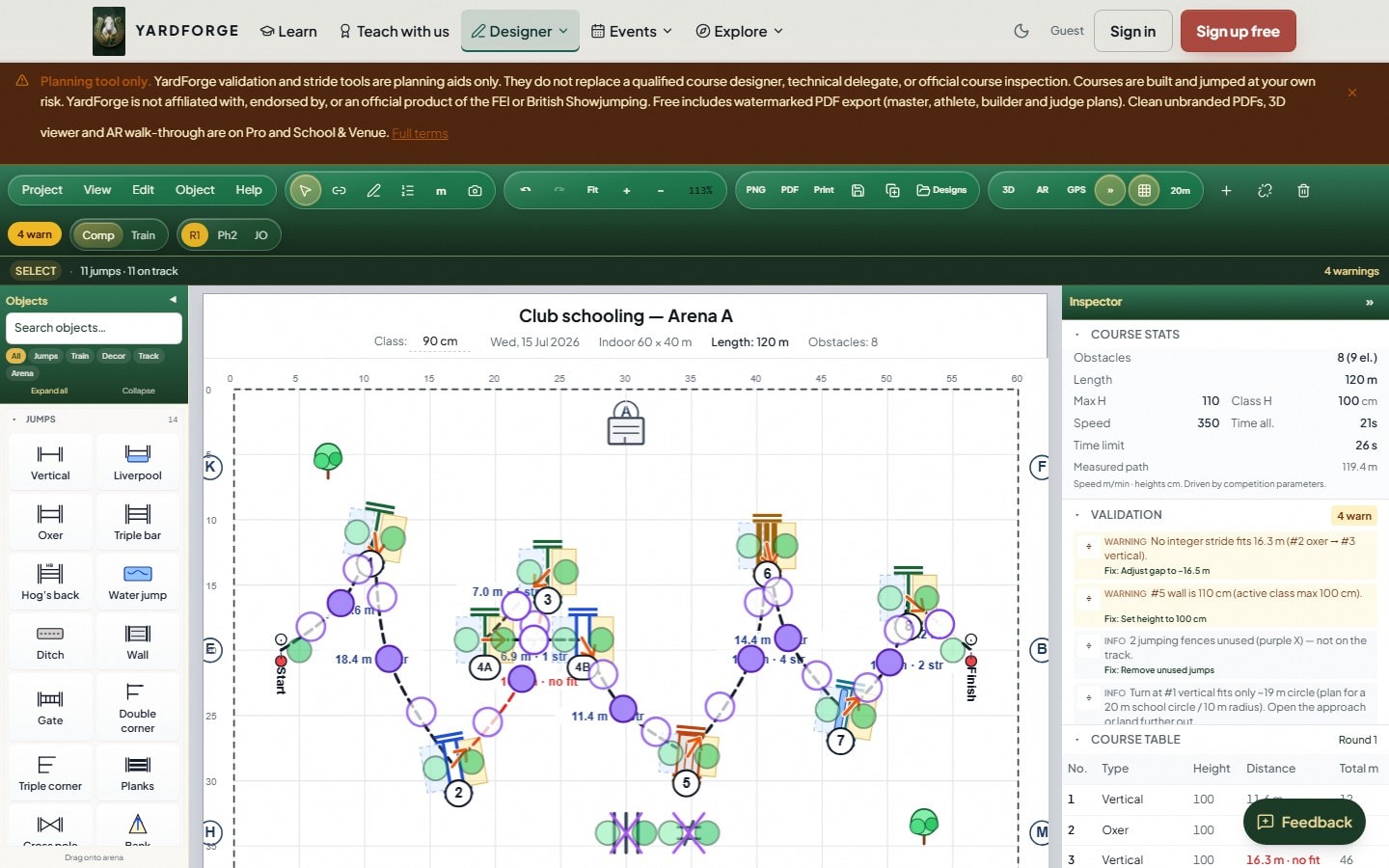
- Use the course designer to keep distances legal for your standard without adding unnecessary fences
- Prefer one quality session over two heavy ones
Fair questions still matter, heat is not an excuse for unsafe related distances. Validate against your rule set as usual (FEI vs BS).
Prevention checklist (print this)
- [ ] Water checked morning, midday, evening
- [ ] Shade / ventilation plan for the hottest hours
- [ ] Work times adjusted
- [ ] Vulnerable horses identified (old, unfit, heavy, clipped/unclipped extremes)
- [ ] Electrolyte strategy agreed with your vet if you use them
- [ ] Show packing includes water and cooling kit, see show day checklist
Bottom line
Heat stress is a management problem first. Good yards change the timetable before the horse pays the price. Good coaches shorten the session before the horse stops sweating. Good designers still build fair tracks, just not marathon ones at 2pm in a windless school.
Plan lighter sessions in the free YardForge designer, keep care notes in horse health records, and run the yard day with yard management tools when you need structure.
Related: Signs of colic in horses · Equine first aid kit · Preparing for competition season · Warm-up routines before a showjumping round

