Equestrian Business Digital Tools in 2026: What Yards and Instructors Should Adopt
·
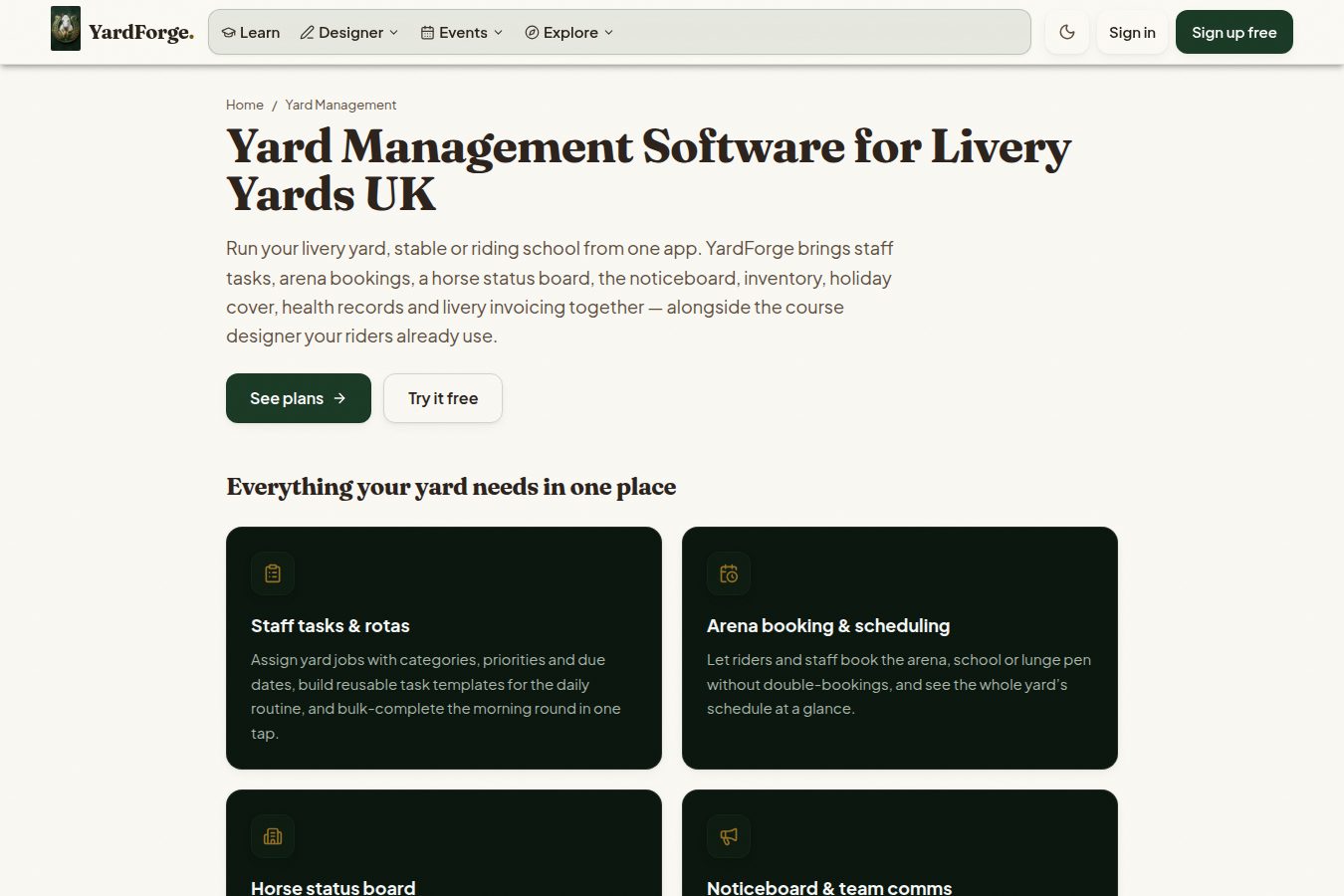
Industry forecasts for 2026 keep repeating the same five themes for equestrian businesses: market expansion beyond pure “horse sport,” digital transformation, tighter labour, higher client expectations, and welfare-driven transparency. The useful question is not “is there an app for that?”, it is which tools remove real work without creating a second full-time job of admin.
This is a practical stack for UK livery yards, freelance instructors, riding schools and small show organisers.
The trends you cannot ignore
Sector pieces through late 2025 and 2026 highlight:
- Labour scarcity, every hour of yard staff time is expensive.
- Client expectations, owners want updates, invoices and lesson notes without chasing WhatsApp threads.
- Welfare and biosecurity records, paper books fail inspections and outbreak tracing (biosecurity checklist).
- Specialist software, yard ops, transport, soundness monitoring, and training tools are maturing past generic spreadsheets (yard software vs spreadsheets).
- AI-assisted products, movement analysis, scheduling and content help exist; most yards still need boring reliability first.
Wearables sit in the same story, useful when they change a decision, hype when they only produce dashboards (equine wearables guide).
A simple digital stack (four layers)
1. Operations layer, who does what, for which horse
- Task boards for feed, meds, turnout, farrier
- Horse records: health, shoeing, worming, weight
- Staff notes that survive a weekend rota change
If you still run the yard on a whiteboard alone, start with a livery digital management checklist before buying sensors.
2. Client layer, money and communication
- Invoices and lesson packs
- Clear livery pricing (UK livery cost context 2026)
- Shared lesson plans for freelance coaches
3. Competition layer, entries, schedules, course plans
- Online entries and class lists (organiser guide)
- Published course maps riders can download before the walk
- Fair design standards that protect social licence
4. Insight layer, only after 1–3 work
- GPS hacks and arena mapping (GPS arena mapping)
- Optional wearables for rehab or high-performance horses
- AI gait or video tools as second opinion, not sole diagnosis
Decision matrix: buy, wait, or skip
| Need | Adopt in 2026 if… | Wait if… |
|---|---|---|
| Yard task + horse records | You have ≥8 horses or ≥2 staff | Single horse at home, low admin pain |
| Online invoicing | Clients already pay late or query fees | You invoice monthly by hand without issues |
| Show entries software | You run ≥4 shows/year | One closed club night with paper works |
| Course design software | You set tracks weekly or sell plans | You rarely build and already own a good process |
| Wearables / AI video | Vet or trainer will act on the data | Nobody will review the reports |
Course plans as a business product
Clubs and freelancers under-price intellectual work. A clear master plan, athlete sheet and builder list are deliverables, the same way a coach sells a grid session. Digital design lets you:
- Reuse templates for Pony Club and riding-club nights
- Export PDFs clients can print (sample exports)
- Validate distances before build day (FEI vs BS validation)
Explore the course designer when the pain is “we rebuild the same track from memory every week.”
Implementation order (90 days)
Days 1–30, Stop the leaks Pick one system for horse notes and one for money. Migrate only active horses. Kill duplicate spreadsheets.
Days 31–60, Client face Templates for lesson notes, livery updates, and show schedules. Publish welfare and biosecurity expectations.
Days 61–90, Competition quality Digital entries if you organise; standard course-plan workflow if you design; staff training so the tool is used on the wet Wednesday, not only the demo day.
Pitfalls that kill digital projects
- Five apps, zero process, staff ignore all of them.
- No offline path, barns still have dead signal; print critical sheets.
- Owner surveillance culture, cameras and trackers without consent destroy trust.
- Buying AI before diaries, fancy analytics on incomplete health logs is fiction.
- Ignoring FEI/official systems, e.g. HorseApp vaccinations are mandatory channels; your yard app sits beside them, not instead of them.
Bottom line
The equestrian businesses that win in 2026 will not be the ones with the most gadgets. They will be the ones who digitise the boring spine, horses, people, money, and fair competition days, and only then add sensors and AI. Start with the layer that saves an hour this week; expand when that hour stays saved.

