Designing Gymnastic Grids: Stride Calculator Tips for Coaches
·
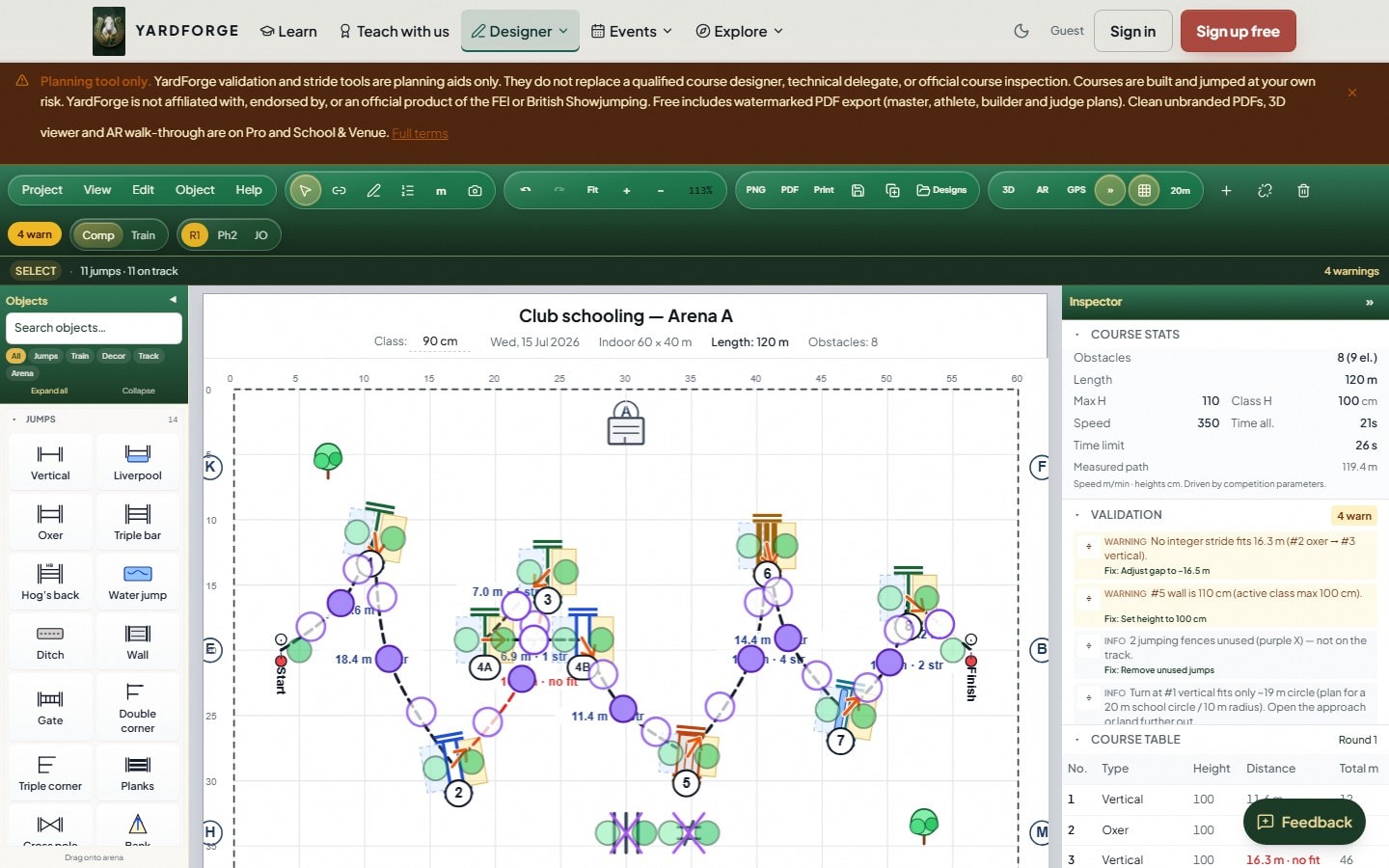
A gymnastic grid only works when the distances ride as you intended. Too short and the horse chips or rushes; too long and you lose the rhythm that makes the exercise educational rather than punishing.
Start with the horse, not the poles
Before you open a tape measure, decide:
- Horse or pony? A large horse at 3.50 m stride needs more room than a 128 cm pony at 2.80 m.
- Height today? Lower fences allow a slightly shorter stride; at 1.20 m+ most horses need honest take-off and landing room.
- Going? Deep sand or grass shortens the effective stride; all-weather often rides longer.
Use the free stride calculator on YardForge to convert metres ↔ strides for your horse's profile before you set poles.
Standard grid distances (starting points)
These are schooling defaults — adjust for your arena surface and horse:
| Exercise | Typical distance (horse) | Strides |
|---|---|---|
| Bounce | 3.9–4.3 m | 0 (bounce) |
| One-stride double | 7.0–7.7 m | 1 |
| Two-stride double | 10.0–11.0 m | 2 |
| Three-stride line | 13.5–15.0 m | 3 |
Walk the line in boots and count your own steps if the ground is unfamiliar — then plug the metres into the calculator to confirm stride count.
Build the grid in 2D first
Moving poles repeatedly tires horses and wastes lesson time. In the course designer:
- Set your arena size (or map it with GPS if it is non-standard).
- Place poles and fences on a scaled canvas.
- Let the stride engine flag combinations outside your target range.
- Switch to 3D viewer to check approach angles before you drag equipment out.
Templates such as bounce grids and related-distance exercises are built in — search the template library when you open a new course.
FEI and BS checks for competition grids
If you are schooling a course that must later meet British Showjumping or FEI tables, switch the competition standard in the designer. Distances that are fine for a Tuesday grid may be illegal for a Saturday class at the same height. Our guide to BS course-building rules covers the published limits.
When to shorten or lengthen
- Shorten if more than half your riders add a stride or hit the base of the second element.
- Lengthen if horses are landing flat and drifting past the ideal take-off point.
- Leave it if the exercise is deliberately demanding — but say so in the lesson plan.
Share the plan with your yard
Enterprise yards can save the grid as a course and share a read-only 3D link with working pupils. Instructors selling structured plans can also list lesson notes on the Learn marketplace.
Next reads: Show jumping distances explained · Polework exercises for show jumpers · How to use the stride calculator effectively · Open the designer

