How to Design a Clear-Round Show Jumping Course in a Home Arena
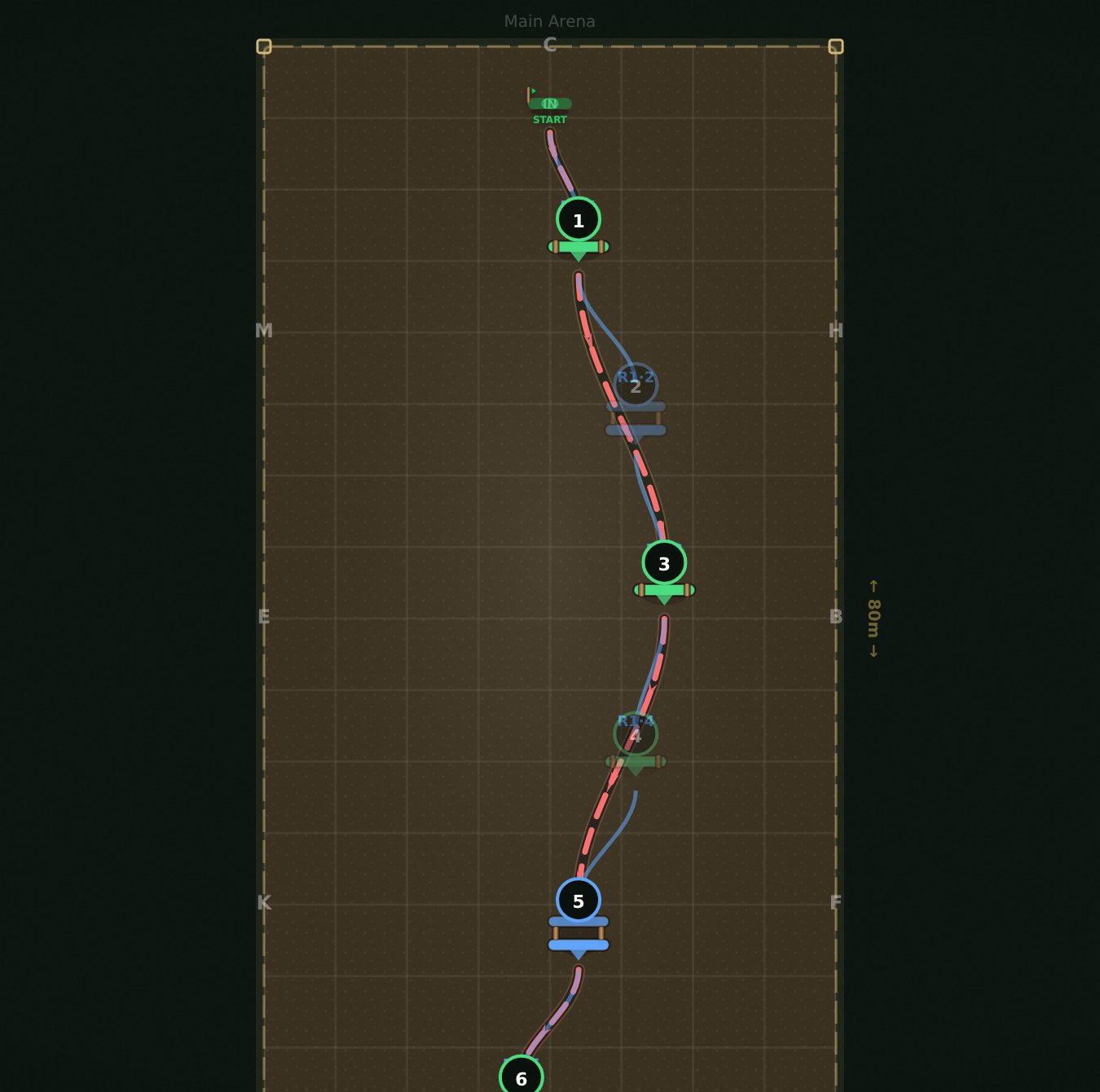
A home clear-round should feel like a proper track, not a random cluster of jumps. Riders want a fair start, a couple of real related distances, and a finish that does not dump them into the gate. You want something you can put up in under an hour and tweak between heights without rebuilding the world.
This is for private arenas, riding schools, and DIY unaffiliated mornings. Planning aid only, if you run affiliated classes, follow your governing body and schedule.
Decide the job of the track
Clear-round at home usually means one of:
- Confidence day (inviting distances, simple questions)
- Prep for next weekend’s show (similar height, one harder line)
- Teaching day (one combination, one rollback, rest straightforward)
Pick one job. A track that tries to be a championship test and a baby’s first clear-round at once usually fails both.
Fence count by arena size
| Arena (approx.) | Sensible clear-round count | Notes |
|---|---|---|
| 20 × 40 indoor | 7–9 fences | One related line, optional double |
| 20 × 60 indoor | 8–11 fences | Room for two related lines |
| Small outdoor | 8–12 fences | Use space; do not fill every corner |
| Large outdoor | 10–12 fences | Still leave rebalance room |
More fences are not more professional. Clear-rounds pay off when horses jump away confidently.
A simple skeleton that works almost everywhere
- Fence 1, inviting vertical, good approach from the gate.
- Related distance, three or four strides, honest for the height.
- Single on a long side, oxer or vertical, clear sightline.
- Optional double, only if the level is ready; fair in and out.
- Change of direction, one sensible turn, not a series of traps.
- Second related or bending line, if space allows.
- Last fence, straightforward, path to the out-gate clear.
Sketch that skeleton before you drag a single wing. On a phone or laptop you can drop fences onto a scaled arena and read the planned strides with YardForge designer, then build to the numbers.
Heights without drama
Run the lowest height first if multiple groups share the morning. When you step up:
- Raise cups on the same footprints where possible
- Re-measure related distances if the stride target changes with height
- Do not turn a confidence double into a tight two-stride by accident
Keep a sticky note on the plan: “70 cm distances” vs “90 cm distances” so helpers do not “just put them back where they were” after a raise.
Warm-up and traffic
Home arenas often use the same space for warm-up and course. If that is you:
- Put two warm-up fences on a short end or outside the track if you can
- Never block the only path to fence 1 with a grid still in place
- Call a short hold if someone is walking the course while another horse is still jumping
Fillers and questions
For a clear-round, fillers should help horses read the fence, not hide the back rail. Save technical fillers and tight skinnies for a schooling session labelled as such. Riders booking a clear-round are often polishing confidence, not sitting a masters class.
Print one page
Even at home, one page with numbers and distances stops arguments when two coaches share the arena. Include:
- Arena size
- Height
- Fence list (V / oxer / double)
- Related distances in metres and intended strides
- Date
Photograph it when the track rides well. That photo is next month’s starting point.
Example: 20 × 40 confidence clear-round (idea, not gospel)
- 8 fences
- Fence 1 vertical near a long side
- Four-stride vertical to vertical on the far long side
- Oxer off a corner with room to land
- No combination, or a very fair double only for the higher group
- Last fence vertical toward the short end, exit along the boards to the gate
Walk it. If the four-stride feels cramped for your horses, open it or drop a fence. Your horses are the measuring wheel that matters most after the tape.
Reuse through the season
Keep three saved plans:
- Straight confidence track
- One-combination track
- Show-prep track with a rollback
Rotate them. Horses learn the “usual Sunday layout” faster than you think; small changes keep them honest without redesigning from zero.
Build faster next time
- Open last month’s plan.
- Adjust two fences for today’s height.
- Measure the related lines.
- Number and walk.
- Jump.
That is a clear-round morning, not a construction project.
Design the skeleton on screen first if it helps: https://yardforge.co.uk/designer.
If a home track still rode sticky after you measured, send the arena size and height, practical notes beat vague praise. Rules for any official class still sit with your organiser and governing body.

